
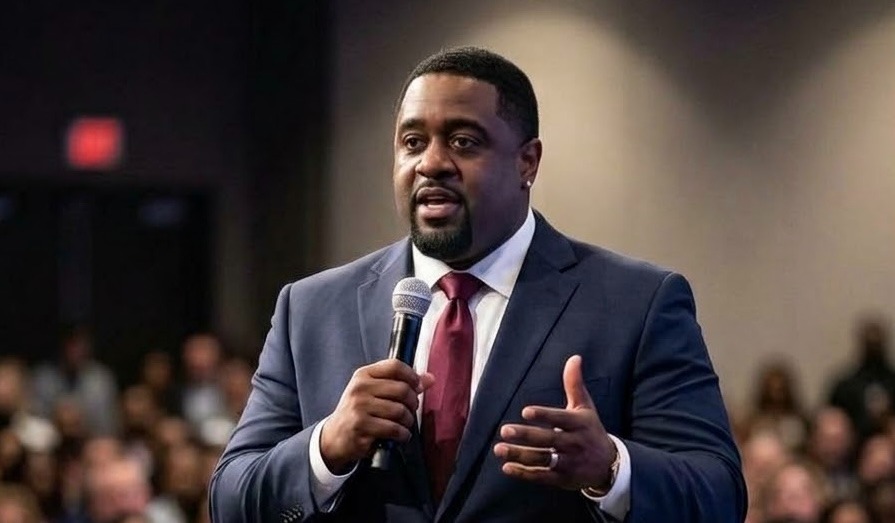
On the sixth anniversary of his 2020 clemency, the Engineered Tax Services National Ambassador is a case study in how public evaluation often stops at the worst chapter
WEST PALM BEACH, Fla. — A criminal record is often the first fact a search returns. The work that follows it is harder to surface. Six years after Charles “Duke” Tanner was released by clemency, that gap is the useful subject.
On October 21, 2020, President Donald Trump granted clemency to the former professional boxer from Gary, Indiana. Tanner had been arrested in 2004 on a first, non-violent drug conspiracy offense, originally sentenced to two life terms, later reduced to 30 years, and had already served 16 years, six months, and 21 days. The anniversary is the reason this is news now. The more durable question is what evidence a person is allowed to accumulate after the sentence ends, and whether that evidence is permitted to count.
The Gap Between a Record and a Person
Tanner’s legal history is public and is not minimized here. He has said he was accountable for the choices that led to the case. A full presidential pardon followed in May 2025. The pardon is a legal fact. It does not automatically answer every question a cautious employer or institution might still have. What it does not do, either, is make the subsequent record irrelevant.
The distinction is practical. Acknowledging a past chapter is not the same as treating that chapter as a complete description of the person six years later. Sustained responsibility, professional conduct, and the willingness of others to assign real work are the evidence that can be examined. Tanner’s file now includes a national role at a specialty tax firm, a co-founded technology and foundation effort focused on reentry outcomes, a published book, and ongoing partnerships with established advocacy organizations. Those are not claims of perfection. They are items that can be checked.
Current Work as the Evidence
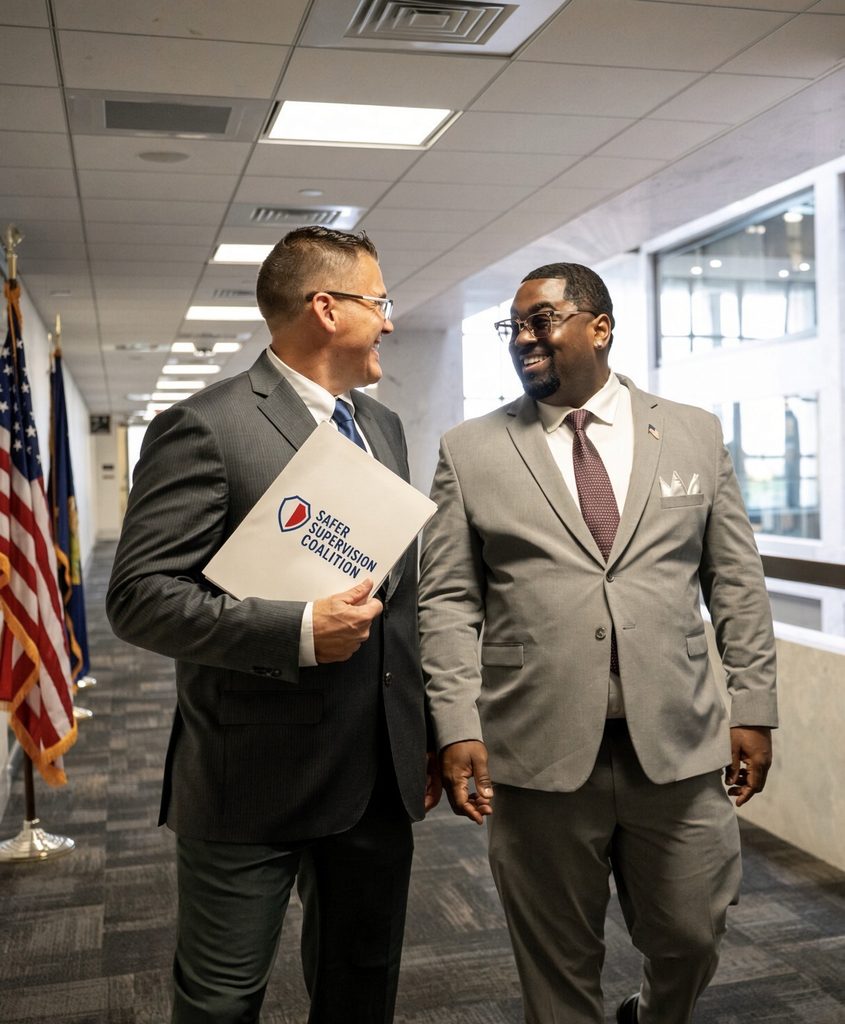
Tanner serves as Vice President of Community Affairs & Outreach and National Ambassador for Engineered Tax Services, and as Co-CEO of Legacy Impact Technology & Foundation. Julio Gonzalez, Founder and CEO of Engineered Tax Services, met him shortly after his release and later brought him into the firm. Gonzalez has said Tanner is “just getting his feet wet.” Tanner has treated the remark as a standard rather than a compliment.
At ETS his responsibilities are operational. He develops relationships with businesses, churches, nonprofits, municipalities, and community operators who were never given a department for grants, incentives, or contracting. He identifies whether a fit exists, introduces decision-makers, and stays after the introduction. The firm’s specialists then handle the documented tax, incentive, and funding work. ETS works alongside accounting firms rather than replacing them. Businesses and communities looking for that intake can text DUKE to 26786.
Through Legacy Impact Technology & Foundation he is building a parallel track aimed at reentry technology and measurable outcomes. He also works with the Jack Brewer Foundation, REFORM Alliance, and the Aleph Institute. A 12-week prison-based fatherhood program, Round by Round, has been built from his book with the Jack Brewer Foundation. These are specific, checkable engagements, not general assertions of impact.
“This is bigger than taxes, grants, or even money,” Tanner said. “It’s about how many people we can help using those tools. It’s about opening doors for businesses, strengthening communities, supporting charitable giving, and fighting for second chances.”
The Book as a Public Statement
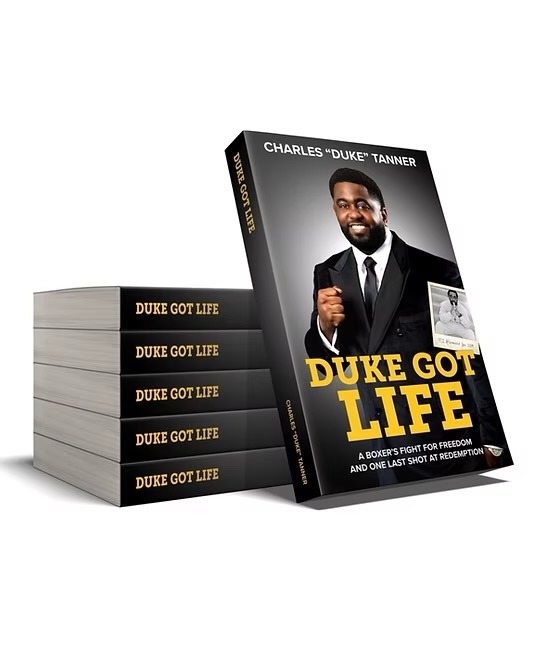
Duke Got Life: A Boxer’s Fight for Freedom and One Last Shot at Redemption is Tanner’s attempt to keep the full record available. He has said a speech can move a room for a few minutes. The book carries the promise, the mistakes, the punishment, the faith, and the families pulled into a sentence they did not receive. It is a public document that invites readers to evaluate the years rather than accept a summary. He has not presented it as proof that every question is settled. He has presented it as a way to stop the story from being reduced to a single headline.
A Business and Economic Question
The broader issue is not unique to Tanner. Employers, workforce boards, and institutions routinely face the same calculation: a documented past versus demonstrated present capacity. Skills, reliability, and professional relationships can be overlooked when evaluation stops at the record. Tanner’s case does not prove a general rule. It supplies one concrete example of what a post-release professional trajectory can look like when someone is given a real assignment and held to ordinary standards of performance.
His earlier 19–0 boxing record is part of the biography. It is not the argument. The argument is the six-year professional record that can now be examined alongside the earlier legal one.

Accountability and Evaluation
A credible evaluation does not require pretending the past is irrelevant. It requires deciding which facts are still decisive and which have been supplemented by subsequent conduct. Tanner has not claimed that trust is automatic. He has said the journey has not been easy and that he is still learning. He has also accepted roles that carry public responsibility and ongoing scrutiny. That combination — an acknowledged past, a pardon, and a sustained professional assignment — is the material available for judgment.
The Anniversary as the Hook
October 21 marks six years since the gate opened. The useful inquiry is not how difficult the years before that date were. It is whether the years after it have produced evidence that institutions are willing to weigh. Tanner’s current titles, the organizations that work with him, and the operational nature of his outreach role are part of that evidence. Readers can evaluate the file for themselves.
The larger question remains open. What does a society miss when it continues to judge a person exclusively by the worst chapter of their life? The answer is not that every record should be ignored. It is that present-day contributions, when they are sustained and checkable, are also part of the record. Duke Tanner’s six-year professional file is one place that question can be examined with specific facts rather than general claims.
About Charles “Duke” Tanner
Charles “Duke” Tanner is Vice President of Community Affairs & Outreach and National Ambassador for Engineered Tax Services, and Co-CEO of Legacy Impact Technology & Foundation. A former 19–0 professional boxer and author of Duke Got Life, he was released by clemency on October 21, 2020, and received a full presidential pardon in May 2025.
About Engineered Tax Services
Engineered Tax Services is a national specialty tax, incentives, grants, and government-funding firm headquartered in West Palm Beach, Florida.
Media Contact
Engineered Tax Services
West Palm Beach, Florida www.engineeredtaxservices.com
Text DUKE to 26786


